Boeing Aerospace Engineer Salary: 2026 Complete Guide
 *
*
TL;DR:>
- Boeing aerospace engineers start with a base salary between $72,000 and $95,000, with total compensation reaching $100,000 to $140,000 including bonuses and benefits. Salary factors include discipline, education level, location, and career level, with significant increases through promotions and education. Benefits such as a 401(k) match and tuition reimbursement add substantial value, making total compensation higher than base pay alone.*
Boeing aerospace engineer salary starts between $72,000 and $95,000 annually for entry-level positions, with total compensation commonly reaching $100,000 to $140,000 once bonuses and benefits are factored in. That gap between base pay and total compensation is the number most aspiring engineers miss when planning their finances. Your technical discipline, education level, and work location each shift that number significantly. This guide breaks down every component of Boeing aerospace engineer pay so you can plan your career and salary expectations with real numbers, not guesses.
What factors influence aerospace engineer salary at Boeing?
Boeing aerospace engineer pay varies by four primary factors: technical discipline, education level, geographic location, and internal level classification. Understanding each one helps you predict where you will land on the pay scale before you even apply.

Technical discipline
Not all engineering roles at Boeing pay the same. Software and electrical engineers start between $80,000 and $95,000, while manufacturing engineering roles begin lower, between $68,000 and $82,000. That $12,000+ gap at entry level reflects market competition. Boeing competes with tech companies for software talent, so it prices those roles accordingly.

Sign-on bonuses also follow discipline lines. Software engineering positions at Boeing often carry sign-on bonuses between $5,000 and $15,000. Manufacturing roles rarely see the same treatment.
For engineers researching how electrical engineer pay compares across the broader market, the discipline premium at Boeing mirrors national trends tracked by Salary Atlas.
Education level
A master's degree adds $10,000 to $15,000 to your starting salary over a bachelor's degree. A PhD can add $25,000 to $35,000 and typically places you at Level 2 entry rather than Level 1. That level difference matters because it compresses the time before your first major promotion. PhDs hired into research roles skip the lowest rung entirely.
Geographic location
Boeing operates major facilities in Seattle, Washington; El Segundo, California; and Huntsville, Alabama, among others. Seattle and Los Angeles area positions carry a 10–15% salary adjustment above base due to higher cost of living. Median home prices in Seattle sit around $620,000 and in El Segundo around $850,000. That adjustment helps, but it does not fully offset housing costs in those markets.
Boeing's level structure and performance
Boeing uses a formal level-based pay structure. Entry-level engineers start at Level 1. Progression to Level 2 typically takes 2 to 4 years and delivers a 15–25% salary increase. Annual merit raises average 3–5%, with top performers receiving up to 8%.
- Level 1: Entry-level, bachelor's degree, $72,000–$95,000 base
- Level 2: Mid-level, 2–4 years experience or advanced degree, significant pay jump
- Level 3 and above: Senior engineers, technical leads, and cleared positions
Pro Tip: Ask your recruiter specifically which level the offer corresponds to. Two candidates with identical titles can be at different levels with meaningfully different salaries and promotion timelines.
How does Boeing's entry-level pay compare to the broader industry?
Boeing's entry-level aerospace engineering salary is competitive within the aerospace and defense sector. The comparison gets more complicated when you include tech companies recruiting for software roles.
| Role type | Boeing entry-level base | Broader market comparison |
|---|---|---|
| Software/electrical engineering | $80,000–$95,000 | Tech giants start at $110,000–$130,000+ |
| Manufacturing engineering | $68,000–$82,000 | Aerospace defense peers are broadly similar |
| General aerospace engineering | $72,000–$95,000 | Competitive within defense contractors |
What Boeing offers in return is different. Job stability and work-life balance at Boeing are consistently rated favorably compared to high-pressure tech environments. Boeing engineers also work on programs with long lifecycles, which creates career depth that short-tenure tech roles rarely provide.
The 401(k) match, tuition reimbursement, and pension-adjacent benefits also close the total compensation gap more than the base salary difference suggests. For engineers who prioritize long-term financial security over maximum starting pay, Boeing's package holds up well.
What is the career salary progression for Boeing aerospace engineers?
Salary growth at Boeing follows a predictable path tied to level advancement and annual merit cycles. The numbers below reflect typical ranges rather than guaranteed figures.
| Career stage | Typical base salary range | Notes |
|---|---|---|
| Entry-level (Level 1) | $72,000–$95,000 | Bachelor's degree, 0–2 years |
| Mid-level (Level 2) | $95,000–$120,000 | 2–4 years, or master's degree entry |
| Senior (Level 3) | $115,000–$145,000 | 6–10 years, technical specialization |
| Technical lead / cleared | $140,000–$170,000+ | Security clearance adds premium |
Security clearances add a meaningful premium at the senior level. Engineers working on classified defense programs at Level 3 and above can earn well above the standard senior range. The clearance itself takes time to obtain, but Boeing often sponsors the process for qualified candidates.
The Engineering Career Foundation Program at Boeing is worth targeting as a new hire. It offers a $3,000 to $5,000 salary premium and provides rotation experience across multiple engineering disciplines. That rotation accelerates your understanding of Boeing's systems and positions you for faster promotion.
Pro Tip: Track your level number from day one. Promotion from Level 1 to Level 2 is the single biggest salary jump in your early career at Boeing. Push for it at the 2-year mark if your performance supports it.For a broader view of aerospace engineer earnings across the full career arc, Salary Atlas publishes median, range, and trend data sourced directly from the U.S. Bureau of Labor Statistics.
What additional compensation and benefits boost total earnings?
Base salary is only part of the picture at Boeing. The benefits package adds substantial value that does not show up in your paycheck but directly affects your financial position.
- 401(k) match: Boeing matches 75% of up to 8% of your salary contribution. On a $90,000 salary, that is $5,400 per year in free retirement money if you contribute the full 8%.
- Tuition reimbursement: Boeing offers up to $25,000 per year in tuition assistance. That figure is among the highest in the aerospace industry and can fully fund a master's degree program over two years.
- Employee stock purchase plan: Boeing offers a 10% discount on company stock purchases. That discount represents an immediate return on every dollar you invest through the plan.
- Sign-on bonuses: Software engineering roles often include $5,000 to $15,000 at signing. These are negotiable and vary by hiring urgency and location.
- Health insurance: Boeing contributes significantly to employee health premiums, reducing out-of-pocket costs compared to many employers.
The tuition reimbursement benefit deserves special attention. If you enter Boeing with a bachelor's degree and use the full $25,000 annual benefit to earn a master's degree, you effectively fund an education that would have cost $50,000 or more. That degree then qualifies you for Level 2 entry on your next role or accelerates your promotion timeline.
Engineers interested in how mechanical engineer salaries compare at the national level can use Salary Atlas to benchmark their discipline against BLS data.
Key Takeaways
Boeing aerospace engineer total compensation consistently exceeds base salary by $20,000 to $45,000 annually when benefits, bonuses, and retirement contributions are included.
| Point | Details |
|---|---|
| Entry-level base pay | Boeing aerospace engineers start at $72,000–$95,000 depending on discipline and location. |
| Total compensation | First-year total comp including bonuses and benefits typically reaches $100,000–$140,000. |
| Discipline premium | Software and electrical roles pay $10,000–$15,000 more at entry level than manufacturing roles. |
| Education impact | A master's degree adds $10,000–$15,000 at entry; a PhD adds $25,000–$35,000 and a higher starting level. |
| Benefits value | The 401(k) match, $25,000 tuition reimbursement, and stock plan significantly increase total earnings. |
What I've learned about reading Boeing salary offers
By Joelen ZyoktovaThe most common mistake I see aspiring aerospace engineers make is treating the base salary number as the whole story. Boeing's offer letter lists a base figure, and candidates compare it directly to tech company offers without accounting for the benefits gap. That comparison is misleading.
Boeing's 401(k) match alone adds thousands of dollars per year in compensation that never appears in a salary comparison table. The tuition reimbursement program is worth even more if you plan to pursue a graduate degree. I have seen engineers effectively earn a fully funded master's degree while working full-time at Boeing, then use that degree to negotiate a Level 2 promotion. That sequence is not accidental. It is a deliberate career move that pays off for years.
The geographic adjustment is also underestimated. Engineers who accept Seattle or Los Angeles positions see higher nominal salaries, but the cost-of-living premium does not fully offset housing costs in those markets. If you have flexibility, a Boeing position in Huntsville, Alabama, or another lower-cost location can deliver better purchasing power on a slightly lower base salary.
My honest view on starting salary negotiations: most entry-level candidates do not push back on Boeing offers, and Boeing does not always volunteer the top of its range. Knowing that software and electrical roles carry sign-on bonuses of $5,000 to $15,000 gives you a specific number to ask about. Recruiters expect negotiation. The worst outcome is a polite "no."
— Joelen Zyoktova
Salary Atlas has the data you need for your career decisions
Salary data should be free, clear, and sourced from the government agencies that collect it. Salary Atlas publishes US salary data by job title sourced directly from the U.S. Bureau of Labor Statistics, with no paywall and no fabricated trends.
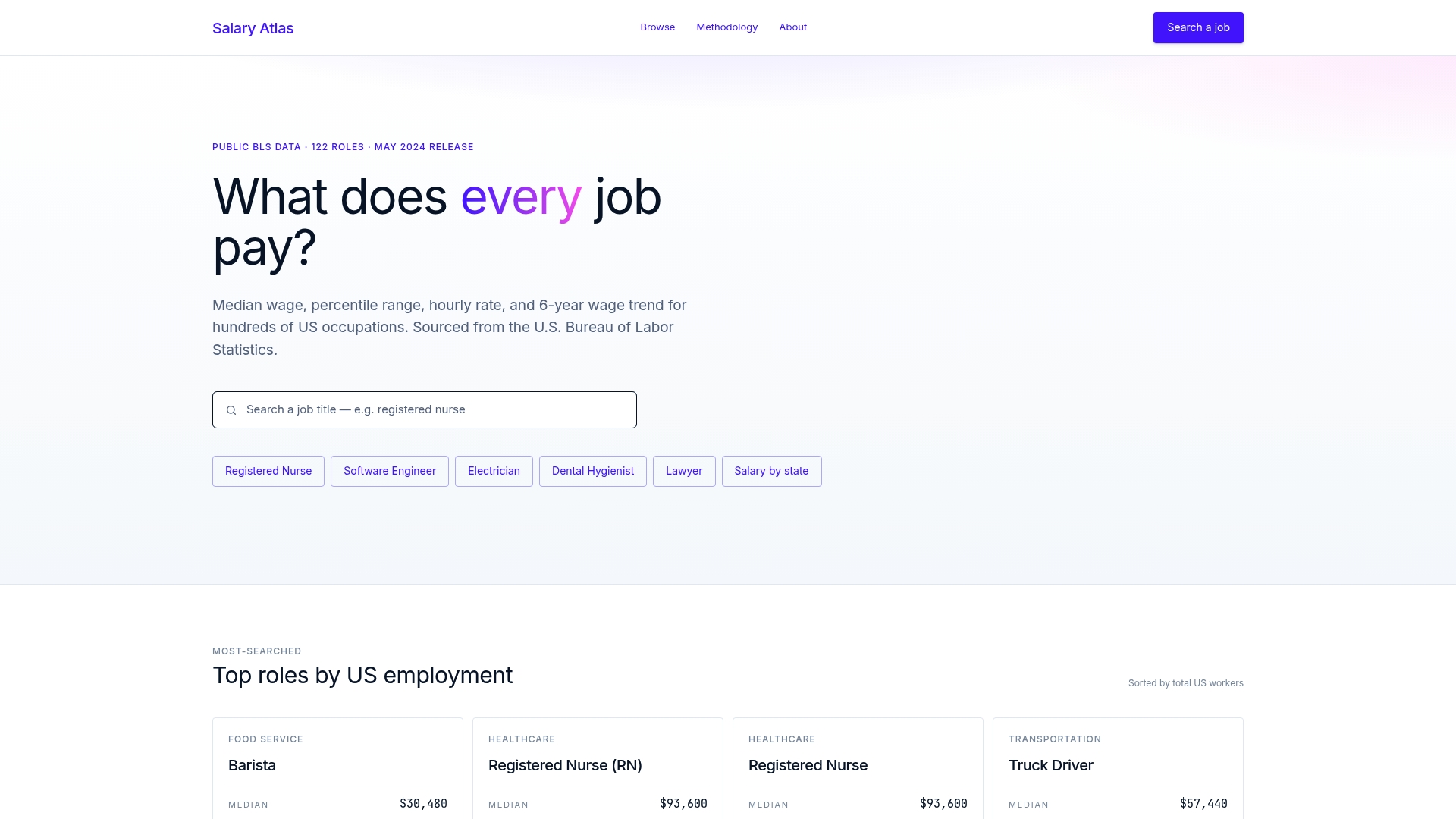
If you are comparing aerospace engineering roles across states, the salary by state tool shows BLS wage data broken down by geography, so you can see exactly how Seattle compares to Huntsville before you accept an offer. Every figure on Salary Atlas links back to its original BLS source, so you can verify what you are reading. Use it to benchmark any offer you receive.
FAQ
What is the starting salary for a Boeing aerospace engineer?
Entry-level Boeing aerospace engineers with a bachelor's degree earn between $72,000 and $95,000 in base salary. Total first-year compensation including bonuses and benefits typically reaches $100,000 to $140,000.
Does Boeing pay more for a master's degree or PhD?
A master's degree adds $10,000 to $15,000 to the starting base salary over a bachelor's degree. A PhD can add $25,000 to $35,000 and typically places the candidate at Level 2 rather than Level 1.
How does Boeing aerospace engineer pay compare to tech companies?
Boeing software engineers start at $80,000 to $95,000, while major tech employers start comparable roles at $110,000 to $130,000. Boeing offsets the gap with stronger job stability, a generous 401(k) match, and up to $25,000 per year in tuition reimbursement.
How fast do Boeing aerospace engineers get raises?
Annual merit raises at Boeing average 3–5% for solid performers, with top performers receiving up to 8%. Promotion from Level 1 to Level 2, which typically happens within 2 to 4 years, delivers a 15–25% salary increase.
Does location affect Boeing aerospace engineer earnings?
Seattle and Los Angeles area positions carry a 10–15% salary adjustment above base due to higher cost of living. Engineers in lower-cost locations like Huntsville may earn a lower nominal salary but often see better purchasing power.