Job Outlook 2026: What U.S. Job Seekers Should Expect
Discover the 2026 job outlook for U.S. seekers. Learn about hiring trends, in-demand sectors, and strategies to enhance your job prospects.
By the Salary Atlas editorial team · Published

The verdict for 2026: hiring is slower and more selective than it's been in years, but it hasn't stalled. Employers plan to grow entry-level hiring by just 1.6% for the Class of 2026, and economists at Indeed's Hiring Lab expect unemployment to drift toward 4.4% by year's end. The jobs that are hiring cluster tightly: healthcare, home health, skilled trades, logistics, and a narrower range of infrastructure-focused tech roles.
- Priority one: build demonstrable skills, not just credentials.
- Priority two: target growing sectors instead of broadcasting resumes everywhere.
- Priority three: use real wage data before you negotiate.
Key Takeaways
The 2026 job market rewards demonstrable skills and targeted sector focus far more than broad-based applications or credentials alone.
| Point | Details |
|---|---|
| Growth is modest, not absent | Employers project 1.6% hiring growth for new grads, with a plurality calling the market "fair." |
| Demand concentrates narrowly | Healthcare, home health, skilled trades, logistics, and select tech infrastructure roles lead hiring. |
| Skills beat credentials | About 70% of employers now use skills-based hiring, favoring portfolios and work samples. |
| Location changes the math | Regional demographic shifts and industry mix mean local demand can outpace national averages. |
| Research pay before you negotiate | Salary Atlas offers free, BLS-sourced pay data by job title and state to set realistic targets. |
Table of Contents
- Key 2026 Labor Market Trends At A Glance
- Which Jobs Are Most In Demand In 2026?
- What Do The Headline 2026 Projections Actually Say?
- How Is AI Reshaping Hiring Standards?
- Where Are Job Opportunities Concentrated By Region?
- What's Happening With Wages In 2026?
- What Should Job Seekers Do In The Next 90 Days?
- Sources
- FAQ
Key 2026 Labor Market Trends At A Glance
Growth is slowing, not reversing. The OECD's 2026 Employment Outlook describes labor markets as resilient but showing real signs of strain, with sharp regional variation baked in. A few forces are doing most of the work this year:
- AI is recomposing tasks inside jobs more than it's eliminating whole occupations outright.
- Skills-based hiring has gone mainstream: roughly 70% of employers now screen for demonstrable ability over degree pedigree.
- Entry-level applicants without a portfolio or work sample compete at a real disadvantage.
- Local labor supply, not just national demand, increasingly decides who gets hired where.
Which Jobs Are Most In Demand In 2026?
Demand isn't spread evenly. It piles up in a handful of predictable places.
- Healthcare and behavioral health. Nurse practitioners, registered nurses, and behavioral health support roles keep climbing hiring lists, driven by an aging population that needs more care than the workforce can currently supply.
- Personal care and home health. Home health aides and personal care attendants represent structural demand. People are living longer with chronic conditions, and that need doesn't shrink in a slow economy.
- Skilled trades and installation. Electricians, HVAC technicians, and renewable-energy installers are hiring steadily, partly because trade school enrollment hasn't kept pace with retiring tradespeople.
- Logistics and transportation. Warehousing, truck driving, and fulfillment operations remain busy as e-commerce keeps grinding forward, even during a cooler hiring cycle.
- Select tech and infrastructure roles. Information security, data analytics, and IT operations are still hiring, but the mood has shifted from speculative growth bets to filling stability-critical positions.
What Do The Headline 2026 Projections Actually Say?
Three numbers anchor this year's outlook, and each one means something slightly different.
The NACE figure: employers project 1.6% hiring growth for new college graduates. That's positive, but it's a fraction of the growth seen in stronger hiring years, and it tracks with the "fair" sentiment employers themselves reported. The BLS angle: the Bureau of Labor Statistics tracks fastest-growing occupations by percentage growth, which can mislead if you don't also check job-count impact.- Nursing and home health show up strong on both metrics.
- Some tech subfields post high growth rates but modest absolute job counts.
- The OECD flags regional gaps that national averages tend to smooth over.
- Indeed's Hiring Lab panel expects job postings to drift down roughly 1.4% through mid 2027, a gentle cooling, not a cliff.
How Is AI Reshaping Hiring Standards?
AI isn't wiping out categories of work. It's changing which tasks inside a job get automated and which get more valuable. Routine white-collar tasks, data entry, basic drafting, scheduling, are the most exposed. Human judgment, creativity, and domain expertise are holding their value, sometimes gaining it.

Demand for AI-adjacent skills has surged, with significant growth in AI video editing, annotation, and integration roles, according to Upwork's research. Employers increasingly treat AI fluency as an overlay skill: they still hire for the core job, but they expect candidates to use AI tools to do that job faster or better.
With 70% of employers now using skills-based hiring, credentials alone won't carry an application the way they once did. What works instead:
- A portfolio with two or three concrete work samples.
- A microcredential or short certification tied to a specific tool.
- Evidence you've used AI tools inside real projects, not just claimed familiarity with them.
Where Are Job Opportunities Concentrated By Region?
Location matters more in 2026 than it did a few years ago. The OECD points to regional labor markets diverging based on local industry mix and demographic makeup, and the U.S. shows the same pattern at the state and metro level.
Two demographic forces are tightening supply almost everywhere: a fast-growing 65 to 69 age cohort heading into retirement, and reduced immigration flows limiting the pipeline of new workers in hands-on fields. That combination creates localized hiring booms in places losing workers faster than they can replace them, particularly in healthcare and skilled trades.
Before deciding where to look:
- Check whether your target occupation is growing locally or just nationally.
- Compare cost of living against local wage data, not national averages.
- Weigh remote roles against local openings if your field allows either.
What's Happening With Wages In 2026?
Nominal wages are still rising, but the gap between nominal growth and real (inflation-adjusted) growth matters more this year than it has in a while.
Some sectors carry a wage premium regardless. Specialized healthcare roles, certain licensed trades, and security or infrastructure-focused tech positions tend to command above-average pay because supply hasn't caught up with demand.
Practical negotiation approach:
- Pull the local median for your exact job title and state, not a national figure.
- Cross-check that number against BLS OEWS data before you counter an offer.
- Use Salary Atlas's state-level pages to see how your target market compares to nearby metros.
How This Outlook Was Built
This outlook draws on NACE's employer survey, the OECD's Employment Outlook, Indeed's Hiring Lab panel, and ZipRecruiter Research, cross-checked for consistency.
Public labor data, not marketing copy, drives every figure in this article.
- U.S.-focused sources only, prioritizing government and academic data.
- Salary Atlas publishes its own sourcing methodology for wage figures.
What Should Job Seekers Do In The Next 90 Days?
Treat this as a sequence, not a single sprint.
- First 30 days: Rewrite your resume around demonstrable skills instead of job titles alone. Build one or two work samples, a small project, a writing sample, a dashboard, that prove you can do the job, not just describe it.
- Next 90 days: Land an internship, apprenticeship, or short fast-track credential in your target field. Spend real time networking directly into high-demand sectors like healthcare, trades, or logistics rather than mass-applying.
- Longer term: Pursue the specific certification your field actually requires (nursing licensure, electrician apprenticeship hours, security clearances) and keep sharpening AI tool fluency as a standing habit, not a one-time course.
Editor Perspective: What The Data Actually Tells You To Do
The honest read here isn't "AI is coming for your job." It's that employers now expect proof, not promises. Balancing quick employability against long-term investment means picking one demonstrable skill and finishing it, rather than collecting half-finished certifications. Pair that with real pay research, using tools like Salary Atlas alongside your portfolio, and you're negotiating from evidence instead of hope.
, Joelen Zyoktova
Salary Atlas: Put This Outlook To Work
Every projection in this article means little without knowing what a specific job actually pays where you live. Salary Atlas pulls its numbers straight from Bureau of Labor Statistics data, refreshed annually, with no paywall and no signup wall blocking the figures you need.
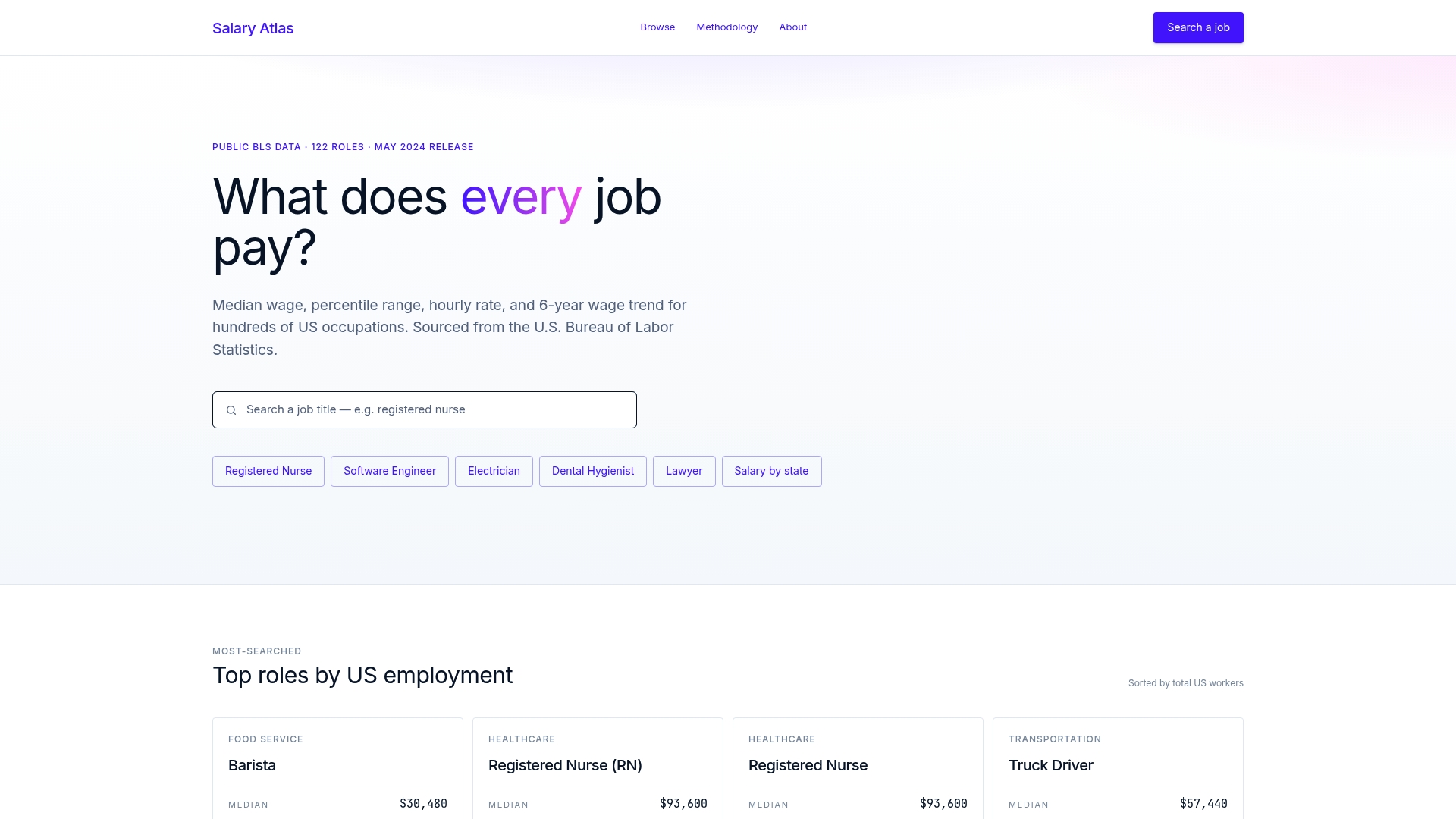
Before you apply, search your target job title and state on Salary Atlas to see the real median pay, not a guess. If you're eyeing one of the growing tech-adjacent roles this outlook flags, the data analyst salary page shows six years of trend data sourced directly from BLS OEWS. Check the numbers before your next interview, not after.
Sources
- Breaking down the data: 2026 NACE Job Outlook (CareerHub, UF)
- OECD Employment Outlook 2026
- Economists Expect a Cooled Labor Market and an AI Reshuffling of White-Collar Work (Indeed Hiring Lab)
- 2026 labor-market predictions, ZipRecruiter Research
FAQ
What Jobs Are Most In Demand In 2026?
Healthcare roles like nurse practitioners and registered nurses, home health aides, skilled trades such as electricians and HVAC technicians, logistics positions, and select tech roles like information security lead hiring in 2026.
What Skills Will Employers Want In 2026?
Employers increasingly prioritize demonstrable skills over degrees, with about 70% now using skills-based hiring, and they specifically value AI tool fluency layered on top of core job competencies.
Will 2026 Have More Layoffs?
Economists don't expect a collapse, but the Hiring Lab panel projects a gradual cooling, with job postings drifting down and unemployment rising modestly rather than spiking sharply.
How Can I Find Accurate Salary Data For 2026 Job Offers?
Look up your target job title and state directly on Salary Atlas, which sources every figure from Bureau of Labor Statistics data without paywalls or signups.
Recommended
Occupation wage figures on Salary Atlas come from the U.S. Bureau of Labor Statistics. Figures in this article that are not linked to a source are estimates. See our methodology.