Jobs That Pay $30 an Hour Without a Degree
 *
*
TL;DR:>
- Many careers including skilled trades, healthcare, and logistics offer $30 per hour without a four-year degree, often through apprenticeships or certificate programs. Building technical skills, licenses, or portfolios accelerates access to high-paying roles like electricians, medical coders, or CDL drivers within months to a few years. Credentialed pathways and local wage research are key to achieving reliable income of around $30 per hour in these fields.*
Skilled trades, tech and creative freelancing, commercial driving, public safety, healthcare support, and commissioned sales are the job categories that most reliably reach $30 per hour without a four-year degree. The fastest paths run through apprenticeships, short certificate programs, CDL training, and bootcamps rather than a bachelor's degree. Here is what this looks like in practice:
- Skilled trades (electrician, HVAC technician): complete an apprenticeship or an accelerated trade program; journeyman wages routinely clear around thirty dollars per hour
- Tech and creative freelancing (web developer, video editor, copywriter): a coding bootcamp or portfolio-driven freelance track can get you there within less than a year
- Commercial driving/logistics (CDL truck driver, railroad worker): CDL training runs a few weeks; railroad conductor programs take a few months
- Public safety (police officer): complete a police academy of a few months and pass state licensing
- Healthcare and clinical support (medical coder/biller): a medical coding certificate takes some time to complete; experienced coders regularly earn around thirty dollars per hour or more
- Sales and B2B roles (insurance claims adjuster, commissioned sales rep): licensing exams and on-the-job training are the main gatekeepers, not a degree
No-degree paths to $30/hr are more accessible than most job seekers realize. The credential, not the diploma, is what moves the needle. *
Table of Contents
- Top jobs that pay around $30 per hour, role by role
- 1. Electrician
- 2. HVAC technician
- 3. Web developer (self-taught or bootcamp)
- 4. Commercial truck driver (CDL)
- 5. Medical coder and billing specialist
- 6. Insurance claims adjuster
- 7. Sales representative (commissioned and B2B)
- 8. Video editor
- 9. Railroad worker and conductor
- 10. Police officer and public safety roles
- 11. Writer and copywriter
- How to realistically reach $30 per hour without a four-year degree
- What $30 per hour actually means for your finances
- Where to find $30-per-hour jobs and training programs
- Key Takeaways
- The credential gap is smaller than most people think
- Salary Atlas makes wage research fast and free
- Useful sources and further reading
- FAQ
Top jobs that pay around $30 per hour, role by role
The roles below cover the full range of entry paths. Pay ranges draw on BLS/OES wage data and are stated as typical hourly ranges for experienced workers.
Quick comparison
| Role | Typical hourly range | Entry requirement | Time to qualify | Where to find jobs | Outlook |
|---|---|---|---|---|---|
| Electrician | $22–$45/hr | Apprenticeship + license | several years | Union halls, contractors | Strong growth |
| HVAC technician | $22–$40/hr | Certificate or apprenticeship | months to a couple years | HVAC companies, contractors | Above average |
| Web developer | $30/hr or more | Bootcamp or self-taught portfolio | months | Tech companies, freelance | Faster than average |
| Commercial truck driver | $20–$35/hr | CDL license | a few weeks | Trucking companies, logistics | Steady |
| Medical coder/biller | $22–$35/hr | Coding certificate (CPC/CCS) | some time | Hospitals, billing firms | Growing |
| Insurance claims adjuster | $22–$37/hr | State license + training | few months | Insurers, independent firms | Stable |
| Sales representative (B2B) | $25–$50+/hr (with commissions) | Product training, some licenses | Weeks to months | Manufacturers, distributors | Steady |
| Video editor | $30–$55/hr | Portfolio-based | several months | Studios, agencies, freelance | Growing |
| Railroad worker/conductor | $25–$45/hr | On-the-job training program | several months | Class I railroads, Amtrak | Stable |
| Police officer | $30/hr or more | Police academy + state cert | few months | Municipal/county agencies | Steady |
| Writer/copywriter | $25–$55/hr | Portfolio-based | several months | Agencies, in-house, freelance | Growing |
1. Electrician
Electrician wages typically run $22–$45/hr depending on state, specialty, and whether you hold a journeyman or master license. The BLS reports a median annual wage for construction and extraction trades that places experienced electricians well above the $30 threshold. Entry is through a union or non-union apprenticeship, usually 4–5 years, combining paid on-the-job hours with classroom instruction. The International Brotherhood of Electrical Workers (IBEW) runs one of the most recognized apprenticeship pipelines in the country.Apprentice wages start below thirty dollars per hour but increase with each credential milestone; journeyman electricians in high-demand metros earn higher wages. Advancement paths include master electrician, electrical inspector, and project superintendent.
*2. HVAC technician
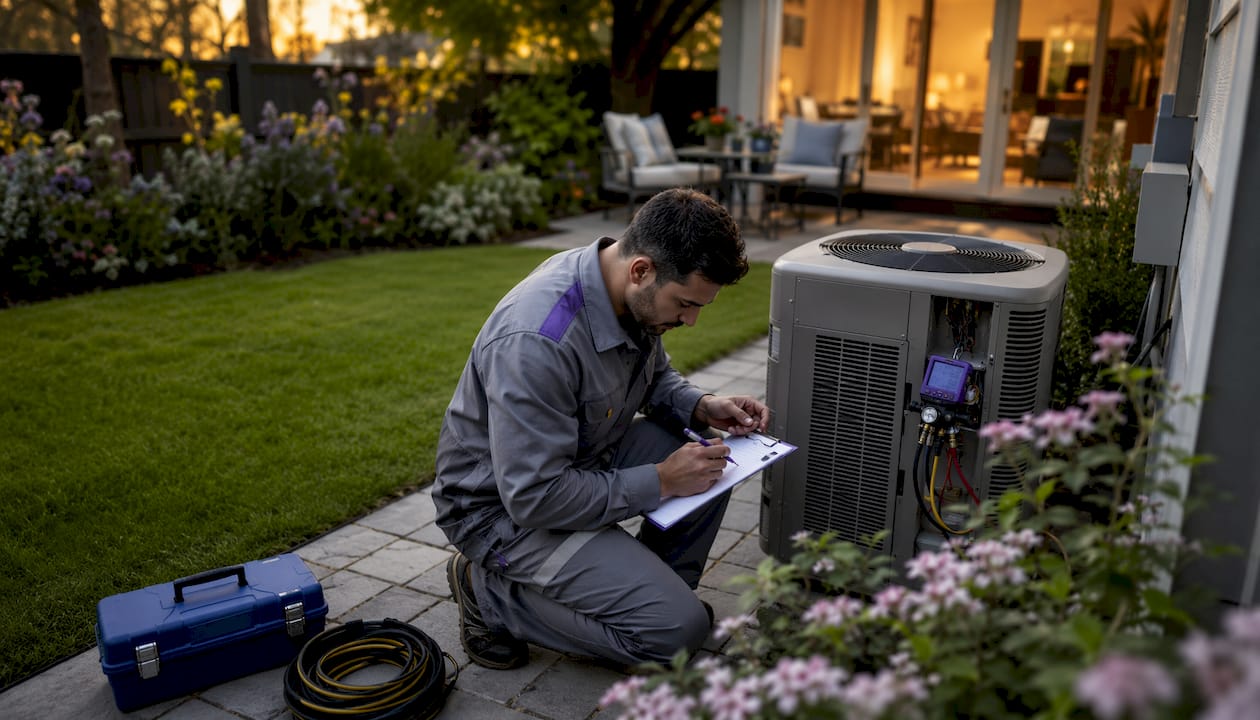
HVAC sits at the intersection of high demand and genuine technical barriers. Residential and commercial systems need constant installation, maintenance, and repair, and the workforce is aging faster than new entrants are replacing it. Typical pay runs in a wide range, with experienced technicians often reaching higher hourly rates. The HVAC technician salary page on Salary Atlas shows state-level breakdowns if you want to check your specific market.

Entry routes include community college certificate programs (6 months to 1 year) and formal apprenticeships through HVAC Excellence or NATE-affiliated programs. Most states require EPA 608 certification to handle refrigerants, which is a short exam-based credential. Overtime is common, especially during summer and winter peaks, which pushes effective hourly earnings higher.
*3. Web developer (self-taught or bootcamp)
Web development is one of the clearest examples of a field where a portfolio beats a diploma. The BLS reports that web developers and digital designers typically earn $30 per hour or more, with experienced developers earning well above that level. Bootcamps like General Assembly, Flatiron School, and Coding Dojo run 3–6 months and focus on job-ready skills rather than academic theory.
Self-taught developers who build a strong GitHub portfolio and contribute to open-source projects can land junior roles within 6–12 months. Freelance rates for mid-level developers often start significantly above thirty dollars per hour. The ceiling here is high: a developer who moves into DevOps or cloud infrastructure can see wages reflected in roles like those tracked on the DevOps engineer salary page.
*4. Commercial truck driver (CDL)
A commercial driver's license is one of the fastest credentials to earn relative to the pay it unlocks. CDL training programs typically run 3–7 weeks and cost $3,000–$10,000, though many carriers offer sponsored training in exchange for a commitment period. Pay ranges from about twenty dollars per hour for local delivery roles to higher rates for long-haul or specialized freight. Overtime and per-diem pay can push total compensation well above the base hourly rate.
The main entry requirement is a Class A or Class B CDL, a clean driving record, and passing a DOT physical. Many large carriers, including regional logistics companies and national freight networks, hire directly from CDL schools. The tradeoff is real: long-haul driving means time away from home, and irregular hours are the norm rather than the exception.
*5. Medical coder and billing specialist
Medical coding is a strong option for people who prefer office or remote work over physical labor. Certified coders, particularly those holding recognized credentials, regularly earn hourly wages that can reach thirty dollars or more. The certification path takes 1–2 years through a community college or self-paced online program. Experienced coders who specialize in high-complexity areas like surgical coding or outpatient facility billing tend to land at the higher end of that range.
This is also one of the more accessible work from home jobs at the $30/hr level. Hospitals, physician groups, and third-party billing companies all hire remote coders. The BLS projects steady demand as healthcare utilization continues to grow.
*6. Insurance claims adjuster
Claims adjusters investigate insurance claims and determine settlement amounts. Most states require a property and casualty adjuster license, which involves a pre-licensing course and a state exam, typically completable in 3–6 months. Pay runs from the low twenties per hour to higher rates; independent adjusters may earn more seasonally. The BLS data places the median for claims adjusters, appraisers, examiners, and investigators at a level that supports the $30/hr target for experienced workers.
Entry-level roles at major insurers often include paid training. The work is detail-oriented and involves a mix of fieldwork and desk work depending on the specialty. Advancement leads to senior adjuster, team lead, or independent adjuster status with higher per-claim fees.
*7. Sales representative (commissioned and B2B)
B2B and wholesale sales representatives are among the highest-earning roles accessible without a degree. The BLS reports that wholesale and manufacturing sales reps earn median total compensation that can be well above thirty dollars per hour including commissions. Entry typically requires product knowledge and some employer-specific training rather than formal credentials.
The catch is income variability. Commission-heavy structures mean a strong month can push your effective rate to $50+/hr, while a slow quarter can pull it below $30. Base-plus-commission roles at established manufacturers or distributors offer more stability. Industries like medical devices, industrial equipment, and software tend to pay the highest commissions.
*8. Video editor
Video editing has moved from a studio-only skill to one of the most in-demand freelance capabilities on the market. The BLS median for film and video editors is about $30 per hour, with freelancers often charging $35–$55 per hour for commercial or branded content work. Entry is portfolio-driven: proficiency in Adobe Premiere Pro, DaVinci Resolve, or Final Cut Pro, demonstrated through a reel of real projects, is what gets you hired.
Short courses through platforms like LinkedIn Learning or Skillshare can build technical skills in weeks. Building a niche, such as YouTube channel editing, corporate training videos, or social media content, helps command higher rates faster than being a generalist.
*9. Railroad worker and conductor
Railroad occupations are underrated on most $30/hr lists. The BLS data shows that locomotive engineers and railroad conductors earn median wages that comfortably exceed $30/hr, with experienced workers at Class I railroads often earning $40–$45/hr plus strong union benefits. Entry is through a formal on-the-job training program run by the railroad itself; no prior experience is required, though a clean background check and physical fitness are standard requirements.
Training programs at carriers like BNSF, Union Pacific, and CSX typically run several months. Union membership through the Brotherhood of Locomotive Engineers and Trainmen (BLET) or the SMART Transportation Division is standard, which means defined pay scales, overtime rules, and retirement benefits. The tradeoff: irregular schedules and on-call availability are part of the job.
*10. Police officer and public safety roles
Police officers represent one of the most structured pathways to $30 per hour or more without a degree. The BLS reports a median annual wage for police and detectives that translates to well above $30 per hour for officers with a few years of experience. Academy training runs 3–6 months depending on the state, and most departments pay recruits during the academy. Municipal and county agencies are the primary employers; federal law enforcement roles typically require a degree.
Beyond base pay, most police positions include defined benefit pensions, health insurance, and overtime pay that can substantially increase total compensation. Advancement paths include detective, sergeant, lieutenant, and specialized units. Some states allow entry with a high school diploma; others require 60 college credits.
*11. Writer and copywriter
Writing is one of the few careers that can reach $30/hr through pure portfolio work, with no formal credential required. The BLS median for writers and authors sits below $30/hr at the midpoint, but experienced copywriters, content strategists, and technical writers regularly earn $35–$55/hr. The gap between the median and the top of the range is wide, and it closes quickly for writers who specialize in high-value niches: B2B SaaS, financial services, healthcare, and legal content all pay premium rates.
Freelance platforms, content agencies, and in-house marketing teams all hire writers without degree requirements. Building a niche-focused portfolio of 10–15 strong samples is the fastest route to $30+/hr rates. The writer salary page on Salary Atlas shows how pay varies by experience level and state.
*How to realistically reach $30 per hour without a four-year degree
The fastest reliable pathways are apprenticeships for trades, short certificate programs for healthcare and driving roles, and portfolio-driven entry for tech and creative work. Here is a practical sequence:
- Audit your current skills. List what you already know: technical aptitude, communication skills, physical capability, comfort with remote work. This narrows your realistic options fast.
- Pick a credential track that fits your timeline. CDL training takes weeks. A medical coding certificate takes 1–2 years. An electrician apprenticeship takes 4–5 years but pays you while you train. Match the timeline to your situation.
- Enroll in a recognized program. For trades, search the Department of Labor's apprenticeship finder. For CDL, look at carrier-sponsored programs that cover training costs. For coding or web development, research bootcamps with job placement data.
- Build proof of skill. A portfolio, a certification number, or a license is what employers verify. For tech and creative roles, three strong samples beat a resume full of vague descriptions.
- Research local wages before you accept an offer. Pay for the same role varies significantly by state and metro area. Use BLS/OES data or Salary Atlas state pages to set a realistic floor before negotiating.
- Negotiate on total compensation, not just hourly rate. Benefits, overtime eligibility, union membership, and retirement contributions can add $5–$10/hr in effective value to a role that headlines at $30/hr.
- Target high-demand sectors with technical barriers. Credentialed entrants in fields with genuine skill scarcity, like electrical work, HVAC, and medical coding, command higher rates than workers in oversaturated fields, even without a degree.
Pro Tip: When you see a job posting advertising "$30+ per hour, no experience required," check whether it is a W-2 employee role or a 1099 contractor position. Commission-based and contractor listings often state a potential hourly equivalent that assumes maximum performance and ignores business expenses. Always ask the recruiter for the base rate, not the "up to" figure. AI tools for tech job seekers can also help you identify skill gaps, tailor applications, and prep for technical interviews, especially if you are entering web development or a related field through a bootcamp. *
What $30 per hour actually means for your finances
$30/hr equals approximately $62,400 per year at 40 hours per week before taxes. That figure shifts considerably based on hours worked, location, and whether the role includes benefits.
| Work scenario | Annual gross | Notes |
|---|---|---|
| Full-time, 40 hrs/week | ~$62,400 | Standard pre-tax calculation |
| Part-time, 25 hrs/week | — | Common for freelance or contract work |
| Overtime, 50 hrs/week | — | Assumes overtime pay for hours over 40 |
| Contractor, no benefits | ~$62,400 gross | Subtract self-employment tax and expenses |
Total compensation is where the real comparison happens. Union and government roles often include benefits that add substantial value beyond base pay. A police officer or railroad worker earning around thirty dollars per hour with full benefits can out-earn a freelance contractor billing higher rates who must cover their own benefits.
*Where to find $30-per-hour jobs and training programs
The most productive channels depend on the role, but a few sources consistently outperform general job boards for these specific occupations.
For skilled trades (electrician, HVAC, plumber):- Union apprenticeship programs through IBEW, UA (plumbers), and SMART (sheet metal/HVAC)
- The Department of Labor's Apprenticeship.gov finder, searchable by trade and state
- Community college workforce development programs that partner with local contractors
- Carrier-sponsored CDL programs at companies like Werner, Swift, and Schneider, which cover training costs in exchange for a tenure commitment
- State-run CDL training programs at community colleges
- AAPC and AHIMA both offer accredited online programs and maintain job boards for certified coders
- Hospital systems and large physician groups post directly on their career pages
- Bootcamp aggregators like Course Report and SwitchUp list programs with verified placement data
- Freelance platforms for building early experience and rate history
- LinkedIn and direct company career pages for in-house roles
- Municipal and county government career portals
- State police recruitment pages, which list academy dates and requirements
- Class I railroad career pages (BNSF, Union Pacific, CSX, Norfolk Southern, Amtrak)
- BLET and SMART-TD union websites for information on represented positions
Key Takeaways
Most jobs that pay $30 per hour without a degree require a specific credential, license, or demonstrable portfolio rather than years of experience or a four-year degree.
| Point | Details |
|---|---|
| Fastest credential paths | CDL (3–7 weeks), police academy (3–6 months), and coding certificates (1–2 years) are the quickest routes to $30/hr. |
| Annualized income | $30/hr equals roughly $62,400/year at 40 hours per week before taxes. |
| Total compensation matters | Union and government roles often add $5–$10/hr in effective value through benefits, pensions, and overtime. |
| Location changes everything | Metro areas can pay more than rural areas for the same role; always check local BLS or Salary Atlas data. |
| Salary Atlas for wage research | Salary Atlas provides free, BLS-sourced wage data by job title and state, with no paywall or signup required. |
The credential gap is smaller than most people think
Most job seekers overestimate how long it takes to reach $30/hr without a degree, and that overestimation keeps them stuck in lower-paying work longer than necessary.
The pattern that shows up repeatedly in wage data is this: the roles that pay well without a degree share one trait. They have a genuine technical barrier, whether that is a state license, a physical certification, a demonstrated portfolio, or union membership. That barrier is what creates the wage premium. A high school graduate who completes an IBEW apprenticeship will out-earn most four-year college graduates in their first decade of work, with no student debt and a pension on top.
What the data does not show as clearly is the trade-off side. Physical trades carry injury risk and wear on the body over decades. Long-haul trucking is genuinely isolating. Commission sales income is volatile in ways that make budgeting difficult. Police work involves stress and risk that do not show up in the hourly rate. These are real considerations, not reasons to avoid these careers, but they belong in the decision.
The strategic move is to pick a sector where the credential is achievable in your timeline, the demand is durable (not a trend), and the working conditions are ones you can sustain for years. Electricians, HVAC technicians, and medical coders all fit that description. So do railroad workers and police officers, for people who can handle the schedule and environment.
Salary Atlas sources every wage figure from the Bureau of Labor Statistics and links back to the primary data, so you can verify any number in this article against the actual OES survey rather than taking a job board's word for it.
*Salary Atlas makes wage research fast and free
Knowing which jobs pay $30/hr is only half the picture. The other half is knowing what those jobs actually pay in your state, your metro area, and at your experience level. That is exactly what Salary Atlas is built for.
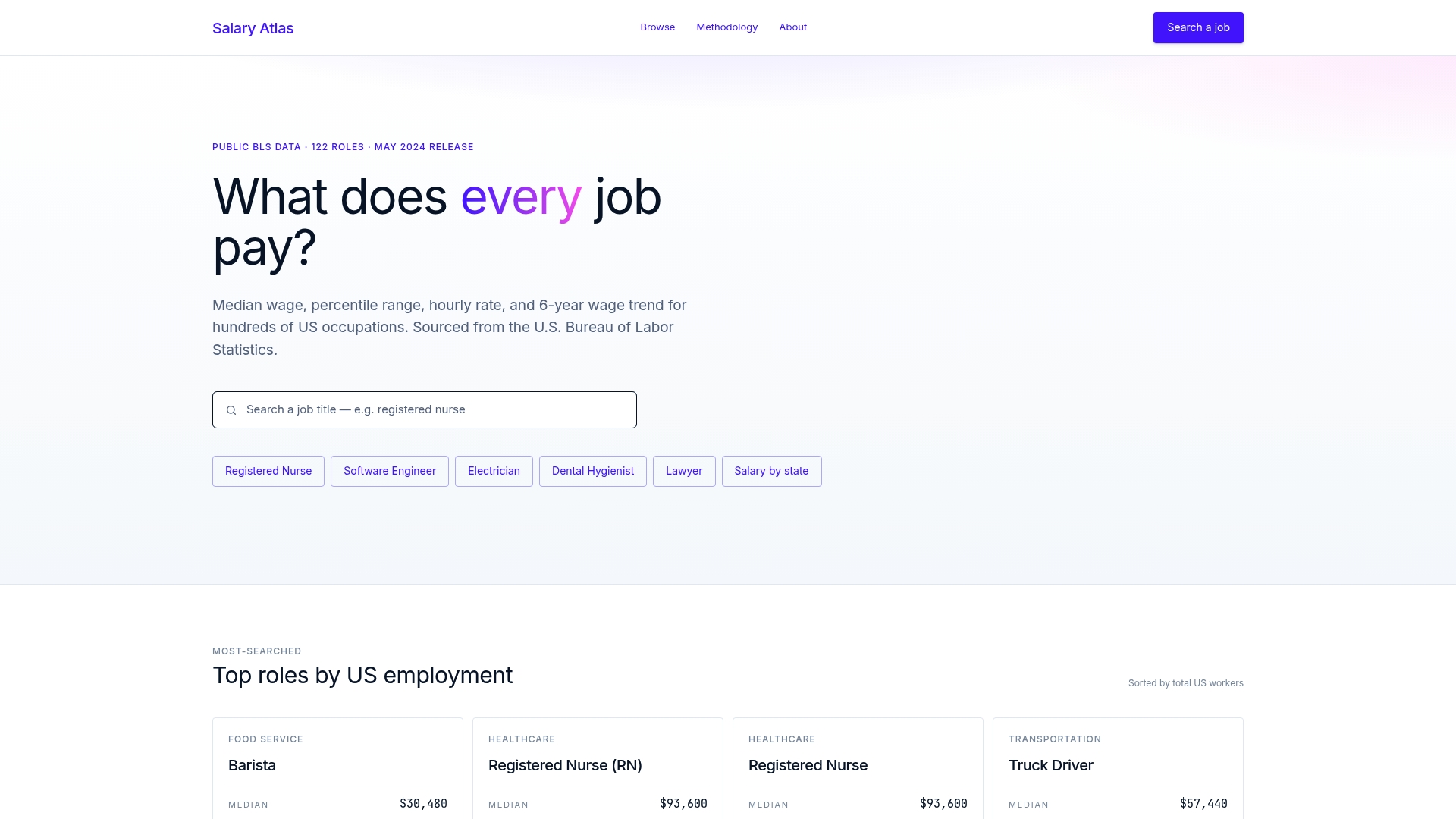
Every wage figure on Salary Atlas comes directly from the U.S. Bureau of Labor Statistics, broken down by job title, state, and percentile. No paywall, no signup, no fabricated "estimated" figures. You can check the electrician salary page, the HVAC technician salary page, or the salary by state tool to see exactly what workers in your area are earning at the 25th, 50th, and 75th percentile. If you want to understand how the figures are calculated, the methodology page walks through the sourcing in plain language. Start your search at Salary Atlas and bring a real number into your next salary negotiation.
*Useful sources and further reading
- BLS Occupational Employment and Wage Statistics (OES) — The primary source for all wage ranges cited in this article. Searchable by occupation and state.
- BLS Occupational Outlook Handbook — Job-by-job profiles covering duties, pay, entry requirements, and growth outlook for every occupation listed here.
- Coursera: Jobs That Pay $30 an Hour Without a Degree — Useful overview of no-degree pathways with credential examples.
- Tallo: Jobs That Pay $30 an Hour Without a Degree — Covers apprenticeship wage progression and sector selection strategy.
- SalaryAfter: $30 an Hour After Tax — Annualized income and take-home estimates for $30/hr earners.
- PayCalc.fyi: $30 an Hour in California — State-specific breakdown with metro vs. rural wage variance data.
- Salary Atlas state wage pages — Free, BLS-sourced wage lookups by state and job title for verifying local pay expectations.
FAQ
What kind of job pays $30 an hour without a degree?
Electricians, HVAC technicians, commercial truck drivers, medical coders, police officers, and web developers all commonly reach $30/hr through apprenticeships, short certificate programs, or portfolio-based entry rather than a four-year degree.
Is $30 an hour a good wage in the U.S.?
At 40 hours per week, $30/hr equals roughly $62,400 per year before taxes, which sits above the national median household income in many states. Whether it is "good" depends on your location: in high-cost metros like San Francisco or New York, it covers basics but leaves little margin; in lower-cost regions, it supports a comfortable standard of living.
What jobs in Texas pay $30 an hour?
Texas has strong demand for electricians, HVAC technicians, CDL truck drivers, and oil-field support roles, many of which reach or exceed $30/hr. Medical coders and insurance claims adjusters also hit that range in major Texas metros like Houston, Dallas, and Austin. Use the Salary Atlas state pages to check current BLS figures for specific Texas occupations.
How do I actually start earning $30 an hour?
Pick a credential track matched to your timeline: CDL training for driving roles (3–7 weeks), a state adjuster license for insurance work (3–6 months), or a trade apprenticeship for electrical or HVAC work (1–5 years with paid wages throughout). Build the credential, then negotiate based on verified local wage data rather than the job posting's headline figure.
Are "no experience, $30/hr" job postings real?
Some are, but many commission-based and contractor listings state a potential hourly equivalent that assumes peak performance. Always confirm whether the role is W-2 or 1099, ask for the base rate, and check the actual pay band against BLS data before accepting an offer.